A good pantry is not a display. It is a working shelf that decides what dinner looks like on a wet Tuesday in February, when the fridge is half empty and nobody wants to go back out. Most UK kitchens offer a tall cupboard, a corner unit and a bit of worktop — and that is enough, if you build the pantry around how you actually cook. This plan takes seven days, in bursts of twenty to forty minutes.
Day 1: Audit before you buy anything
Empty one shelf at a time rather than the whole cupboard. Sort everything into four piles: keep, use soon, bin, and give away. Unopened, in-date tins and packets are usually welcome at food banks and community fridges, though it is worth checking what they can accept.
Then look for duplicates. Most kitchens hide three part-used bags of plain flour, two jars of the same spice and a tin of something bought for one recipe three years ago. Duplicates make sense for anything you use weekly. For anything you use twice a year, finish what you have before buying more.
Write down what survives. A single list on your phone, or a sheet of paper inside the cupboard door, becomes your stock list — and it is the difference between a pantry and a pile.
Day 2: Measure, then choose your zones
Measure shelf heights and depth with a tape measure and note the numbers somewhere you will find them again. Shelves are often shallower than the tins you want to store. A 30cm-deep cupboard takes two rows of standard tins; anything deeper needs a turntable, a pull-out basket or a tray you can slide forward.
Zones should follow how often you reach for things, not just what the food is.
Four zones that work in most UK kitchens
- Daily: eye level at the front — tea, coffee, salt, cooking oil, the four or five spices you use most.
- Weekly: waist height — pasta, rice, tinned tomatoes, beans, stock, onions, garlic.
- Backstock: top shelf or a labelled box elsewhere — the unopened spares.
- Baking and occasional: bottom shelf or a lidded box — flour, sugar, dried fruit, baking powder, the Christmas tin.
Whatever you reach for while the kettle boils belongs in Daily. Everything else can be less convenient.
Day 3: Clean, decant, date
Wipe the shelves, check for damp patches and look for signs of mice or moths before anything goes back. A wipeable liner makes future cleaning much quicker.
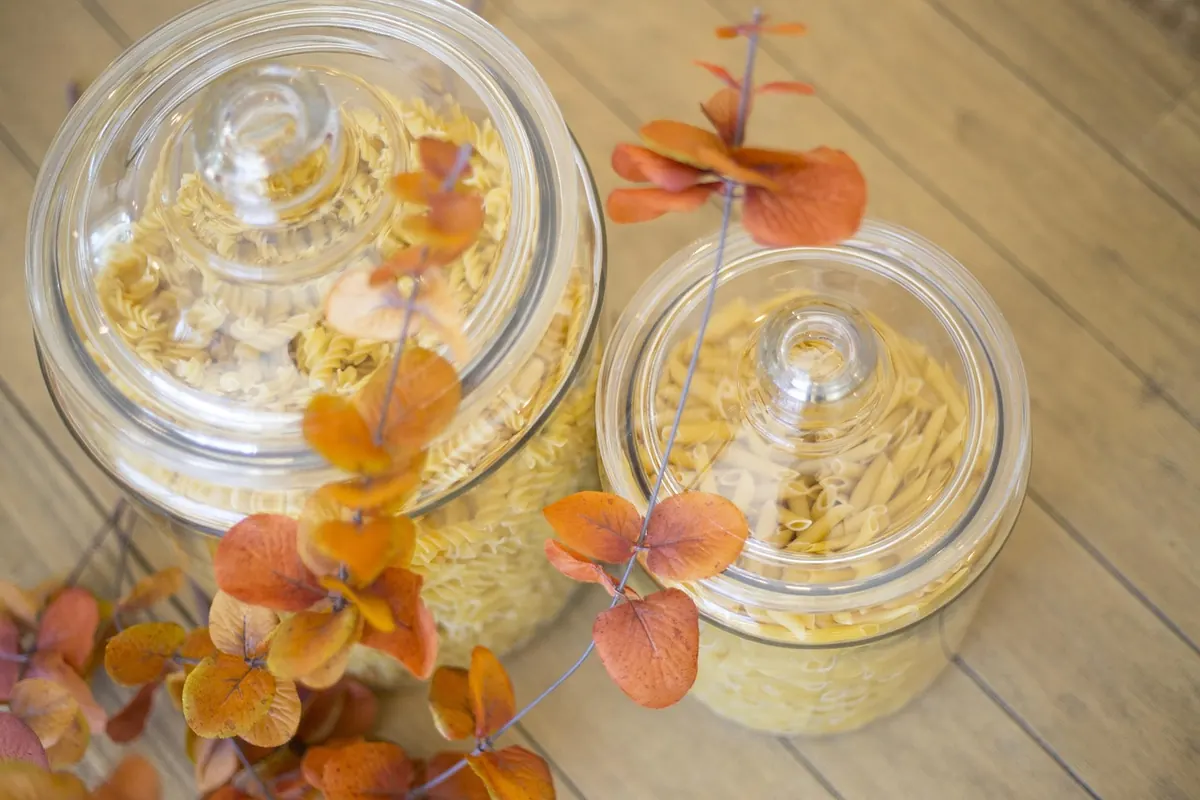
Decanting into clear, airtight containers saves space and shows you what is left at a glance, but it is not right for everything. Keep the original packaging for anything with cooking instructions, allergen information or a use-by date — or cut out the panel and tape it to the jar. Flour, sugar, rice, oats, pasta and dried fruit decant well. Jars of mustard, marmalade and pickles are already sealed, so leave them alone.
Use-by dates are about safety; best-before dates are about quality. Anything past its use-by date should go. With best-before, use your eyes and nose. If there are allergies in the house, keep the original labels visible.
Day 4: Stock a core list for British cooking
Buying everything at once wastes money. Start with a core that covers most weeknight cooking, then add as you notice gaps.
The core
- Plain and self-raising flour, caster sugar, soft brown sugar
- Salt, black peppercorns, olive oil and a neutral oil
- Tinned tomatoes, tomato purée, baked beans
- Tinned chickpeas and beans, dried pasta, rice
- Stock cubes, dried mixed herbs, bay leaves, curry powder
- Vinegar, soy sauce, mustard, a jar of pesto or curry paste
- Tea, coffee, oats, raisins or sultanas, a bag of nuts
- Tinned tuna or sardines for the days when there is nothing else
What to leave for later
Catering packs, single-use gadgets and spices you cannot name a dish for. Spices fade and flour goes stale, so buy the size you will finish in a few months. A small bag you use up beats a large one you do not.
Days 5 and 6: Arrange, label, log
Heavy items low, light items high, and nothing you need weekly above head height. Stand tins label-out, or use a stepped riser so you can read every one. Keep a pen and a roll of labels in the cupboard; a system you have to leave the kitchen to maintain will not survive the week.
Rotate as you shop: new items go behind the old ones, so the older tin gets used first. Keep a running note of what is in the backstock, and when you take the last one, add it to the shopping list there and then. That one habit prevents both the "we have no rice" panic and the cupboard holding five kilos of it.
Day 7: Cook from it and adjust
Make two meals using only what is in the pantry, plus whatever fresh bits you have. If you cannot, that is useful information: you are missing a staple. Note what you had to go out for, and what you never touched. Then change the list, not your expectations. A pantry that suits your cooking will look different from your neighbour's, and that is the point.
Keeping it working
Five minutes before the weekly shop covers most of it: glance at the backstock, add what is low, move the oldest items to the front. Once a month, check dates and use up open packets. Twice a year — at spring clean time and before Christmas — do a full audit and give the shelves a wipe.
Keep a "use it up" box for anything close to its date and cook from it first. In a small kitchen, work upwards: an over-door rack for spices, a turntable in the corner cupboard, a shallow shelf inside the door for the things that otherwise get lost at the back.
A pantry should make cooking easier, not act as a museum of good intentions. Aim for boring and reliable. If a jar has sat untouched for a year, cook with it this week or let it go.
Photo: Nikiko / Pixabay